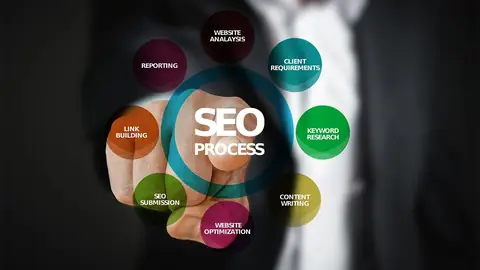
SEO (search engine optimization) is the practice of making a website easier for search engines to understand, trust, and show to people searching for relevant topics. It is not about tricking algorithms; it is about aligning your content and site structure with how search engines discover and evaluate information.
To do SEO well, you need a basic grasp of the three core processes: crawling (finding pages), indexing (storing and analyzing them), and ranking (ordering results for a query). This article breaks each down in plain language and shows what you can control.
What SEO Actually Optimizes
SEO optimizes three things: your website's technical health (so search engines can access and understand it), your content (so it matches what people search for), and your authority (so search engines trust you enough to rank you). Technical health includes site speed, mobile-friendliness, and clean code. Content includes relevance, depth, and freshness. Authority is built through backlinks and brand signals.
Many beginners think SEO is just keywords. In reality, search engines evaluate hundreds of signals. For example, a page with perfect keywords but slow load times (over 3 seconds) or broken mobile layout will struggle. Similarly, thin content that doesn't satisfy intent rarely ranks well, even if it mentions the keyword dozens of times.
The goal is to reduce friction for both users and bots. When a search engine can crawl your pages easily, understand what they are about, and see that other reputable sites link to them, you have a solid SEO foundation. Everything else—titles, headings, internal links—supports that foundation.
- Technical SEO: site speed, mobile usability, crawlability
- On-page SEO: titles, headings, content quality, internal links
- Off-page SEO: backlinks, brand mentions, authority
Crawling: How Search Engines Discover Pages
Crawling is the process of search engine bots (often called spiders) following links from page to page to discover new content. They start with a list of known URLs and follow links on those pages. If your site has no internal links to a page, or if it's blocked by robots.txt, bots may never find it.
You can help crawling by maintaining a clean site architecture and an up-to-date XML sitemap. Most sites with a few hundred pages get crawled within days to weeks, but large sites (10,000+ pages) may take longer. Crawl budget—the number of pages a bot will crawl on your site in a given timeframe—matters more for big sites.
Common crawling issues include broken links, redirect chains, and orphan pages (pages with no internal links). Fixing these ensures bots spend time on your important pages. For a deeper dive, see our guide to website architecture for SEO.
- Use an XML sitemap and submit it in Search Console
- Keep important pages within 3 clicks of the homepage
- Avoid blocking CSS/JS files that affect rendering
- Fix broken links and minimize redirect chains
Indexing: How Search Engines Store and Understand Content
Once a bot crawls a page, it decides whether to index it—that is, store a copy in a massive database and analyze its content. Indexing involves parsing the HTML, extracting text, images, and links, and understanding the page's topic. Pages that are low-quality, duplicate, or blocked by meta robots tags may be excluded.
You can check indexing status in Google Search Console's Pages report. If important pages are not indexed, common causes include 'noindex' tags, canonical tags pointing elsewhere, or server errors. Indexing can take anywhere from hours to several weeks for new pages.
To improve indexing, ensure each page has a unique, descriptive title and meta description, and that content is substantial (typically 300+ words for informational pages). Also, avoid duplicate content across multiple URLs. For troubleshooting, read how to fix indexing problems in Google Search Console.
- Use meta robots tags to control indexing
- Avoid duplicate content by using canonical tags
- Ensure server returns 200 status for indexable pages
- Check the Pages report in Search Console regularly
| Process | What Happens | Typical Timeframe | Tools to Monitor |
|---|---|---|---|
| Crawling | Bots discover new pages via links | Days to weeks | Search Console Crawl Stats |
| Indexing | Pages stored and analyzed | Hours to weeks | Search Console Pages report |
| Ranking | Pages ordered for queries | Weeks to months | Rank tracking tools, Search Console |
| Technical fixes | Improving speed, mobile, crawlability | Immediate to weeks | PageSpeed Insights, Lighthouse |
| Content creation | Publishing new pages | Immediate, but ranking takes time | Search Console Performance |
| Link building | Earning backlinks | Months | Ahrefs, Majestic, Search Console |
Ranking: How Search Engines Order Results
Ranking is the process of ordering indexed pages for a search query. Search engines use complex algorithms that consider hundreds of factors, including relevance (does the page match the query?), quality (is the content trustworthy and well-written?), and authority (do other sites link to it?). User engagement signals like click-through rate and dwell time may also play a role.
While the exact algorithm is secret, we know that content matching search intent is critical. For example, a query like 'how to fix a leaky faucet' likely expects a step-by-step guide, not a product page. Pages that satisfy intent tend to rank higher over time.
Authority is largely built through backlinks from reputable sites. A page with links from established websites in your niche will generally outrank a similar page with no links. However, relevance and technical health can level the playing field for smaller sites. For cost expectations, see how much SEO costs for a small business.
- Match content to search intent (informational, transactional, etc.)
- Earn backlinks from authoritative sites in your niche
- Improve user experience signals like page speed and readability
- Use descriptive, keyword-rich title tags and headings
What You Can Control in SEO
You cannot directly control rankings, but you can control the inputs: technical setup, content quality, and link-worthy assets. Start with technical basics: fast hosting, mobile-responsive design, and clean URL structure. Then create content that answers specific questions better than existing results.
On-page elements like title tags and meta descriptions influence click-through rates, which indirectly affect rankings. Write compelling titles that include the primary keyword near the beginning. For a detailed guide, see how to write title tags and meta descriptions that get clicks.
Off-page, focus on building relationships and creating content worth linking to. Even a few links from relevant, authoritative sites can boost rankings. For local businesses, local citations and reviews matter. Check our local SEO checklist for service businesses.
- Technical: site speed, mobile-friendliness, crawlability
- Content: relevance, depth, freshness, intent matching
- On-page: titles, headings, internal links
- Off-page: backlinks, brand mentions, reviews
Common SEO Myths and Realities
Myth: SEO is dead. Reality: SEO has evolved, but organic search still drives over half of all website traffic. It remains one of the highest ROI channels for many businesses.
Myth: You need to rank #1 for everything. Reality: Ranking #3 for a high-intent keyword often brings more revenue than #1 for a broad, informational term. Focus on keywords that convert.
Myth: More keywords = better. Reality: Keyword stuffing hurts readability and can trigger penalties. Modern search engines understand synonyms and context, so write naturally. For finding easy keywords, try how to find low-competition keywords for free.
- SEO takes time: typically 3-6 months for noticeable results
- Quality over quantity: one great page beats ten mediocre ones
- User experience is part of SEO: speed, readability, mobile
- SEO improves crawling, indexing, and ranking by making your site easy to understand and trust.
- Focus on technical health, relevant content, and authority—not tricks.
- Indexing can take weeks; use Search Console to monitor progress.
- Rankings follow user satisfaction: match intent and provide great experiences.
Editor
Marta has spent years helping small businesses make sense of search marketing without the jargon. She focuses on practical SEO audits, local visibility and content strategy for owner-run companies. Her writing aims to turn confusing ranking advice into steps anyone can follow.